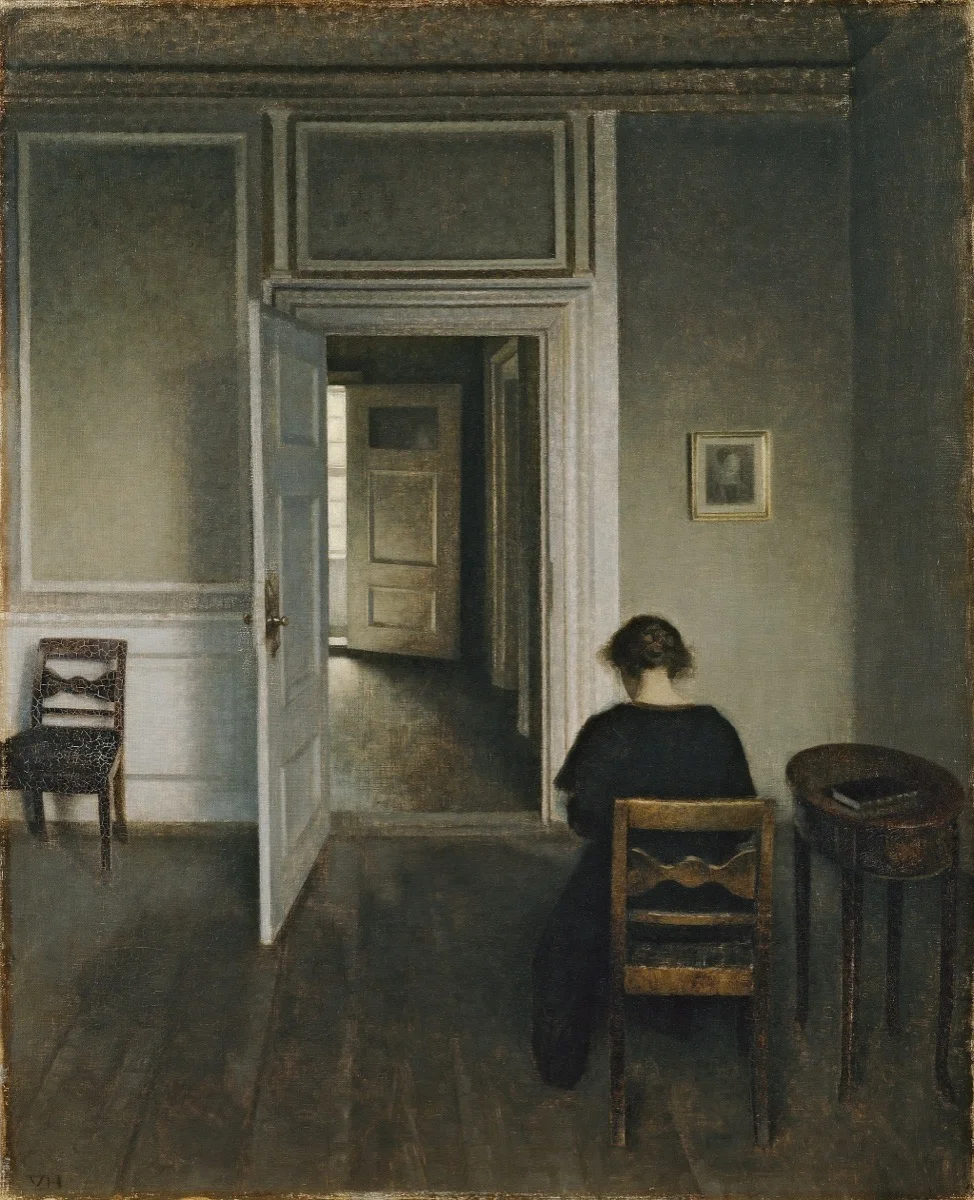
Here's something I keep running into. I'll be talking to someone who builds things - real things, companies, products - and eventually the childhood stuff comes up. And it's the same story, over and over. Parents who checked every box except the one that mattered.
The fridge was full. School fees paid. Roof solid. But encouragement? Curiosity about who you actually were? Consistency you could count on? Nowhere. These parents tracked inputs like quarterly metrics. The output they missed was unmeasurable: does your kid feel like you actually see them?
I call this Minimum Viable Parenting. Like a startup MVP, it's the earliest version that technically ships. It passes inspection. It is not something anyone would recommend.
The Core Delusion
The MVP parent's core delusion is that provision equals parenting. It doesn't. Provision is a transaction. Parenting is a relationship. Confusing them is like confusing a landing page with a product.
You can tell MVP parents by their response when challenged. They don't engage with the substance. They pivot to accounting. "After everything I've done for you?" This reframes emotional needs as ingratitude. It's a shutdown dressed as a question.
"Other kids have it worse" is the escalation. By this logic, no one with food can be unhappy. By this logic, you should be quiet.
The Selection Effect
Tech selects for these kids. Hard.
Think about what that environment actually produces. You learn to rely on yourself - nobody's coming. You develop a work ethic that borders on compulsive, because external validation was a slot machine so you learned to generate your own momentum. You get weirdly good at reading people and producing warmth, because someone had to and it wasn't going to be them. Ambiguity stops scaring you. You grew up never knowing which parent would walk through the door.
VCs call these founder traits. Therapists call them trauma responses. It's the same machinery. Just depends who's labeling it.
I've built things. I'm sixteen and I've shipped products, talked to users, figured out distribution. When I examine why I'm able to do this - why I can sustain focus on hard problems without anyone telling me it's going to work - I trace it back to the same source. No one was going to believe in my projects for me. So I learned to believe in them myself.
This is useful. It's also expensive.
The Cost
The cost shows up in specific ways.
You can't turn off the radar. MVP kids develop extremely sensitive threat detection - reading micro-expressions, tracking emotional weather, anticipating instability. Useful for navigating investors, employees, customers. Exhausting when there's no actual threat.
You can't let people help you. I mean, you can - technically - but it feels wrong. Dangerous, almost. I've turned down support I genuinely needed, then rationalized it as independence. But that's not what it is. It's this: if you depend on someone, they can vanish. And you've seen that movie.
You can't sit still. Rest feels like you're getting away with something. Your worth was always conditional - you were valuable when you were filling silences, managing someone else's emotions, being the stable one. I'm sixteen and I still feel most like myself when I'm mid-build on something. That's not entirely healthy. I know.
You can't trust good things. This one's subtle. When love showed up randomly - warm Tuesday, cold Wednesday, no reason for either - you learned that good doesn't stick around. So when things are good now, some part of you won't settle into it. You're bracing. Always half-waiting for the other version to walk through the door.
The Impossible Key
Research backs this up. Inconsistent parenting produces worse outcomes than consistently harsh parenting. Sounds wrong - surely some warmth beats none? But consistency allows adaptation. Inconsistency prevents it. You can build a model for cold. You can't build a model for random.
MVP kids develop a specific belief: I am the variable. If I were better, smarter, less needy, then the warmth would stabilize. This is wrong. But it's the only model that preserves agency. The alternative - love is random and I can't control it - is too destabilizing to accept.
So you spend years trying to find the key. You optimize yourself. You achieve things. The key never appears, because there was no key. The door was never locked. They just weren't home.
The Glass
My father was in prison most of my life. Political reasons - he was a governor who wouldn't play along. I saw him through glass, once a month, maybe twice if we were lucky.
Here's what I remember. I'd prepare things to tell him all week. Small things - a grade, a project, something funny that happened. I'd rehearse them in my head on the drive there. Then we'd sit on opposite sides of the glass and I'd have maybe twenty minutes. No hugs. No silence that wasn't expensive. Every second had to carry weight.
He couldn't help me with homework. Couldn't come to anything. Couldn't be there when things fell apart. By every metric, he was the more absent parent. But here's what's strange: I never doubted he saw me. When we talked through that glass, I had his complete attention. The constraint made presence non-negotiable.
I think about this a lot. The parent who was physically there every day but mentally checked out. The parent behind glass who was entirely present for twenty minutes a month. Which one was the MVP?
Presence isn't proximity. Some people are there every day and never once make you feel seen. Some people are separated by concrete and glass and still manage to show up completely.
Two Kinds of Confidence
This explains something I've seen in people who make things happen. The ones from stable homes carry this assumption - work hard, get results, world makes sense. When it doesn't, they're genuinely shocked. Like the rules broke.
MVP kids don't have that assumption to lose. They already know effort doesn't guarantee anything. They watched themselves be perfect and still not get consistency. The rules were never stable to begin with.
So they're resilient in ways that confuse people. No funding? Keep building. No validation? Keep building. Ambiguity everywhere? Fine, that's just Tuesday. They never learned to wait for permission because permission wasn't coming.
The downside: they can't stop. The machinery that got them here doesn't have an off switch. You spend years scanning for threats, you don't just... stop scanning because things got good. Some part of you is still waiting for it to fall apart.
The Real Work
The thing nobody tells you is that the traits that got you out are not the traits that let you live. The hypervigilance, the self-reliance, the ability to generate your own belief from nothing - these are survival tools. They work. But you can't white-knuckle your way through an entire life.
At some point you have to learn the things you skipped. How to rest without guilt. How to receive without suspicion. How to let good things be good without waiting for the catch.
I'm not there yet. I'm sixteen. I'm still more comfortable building than sitting still, still better at giving warmth than receiving it, still scanning rooms I don't need to scan. But I know the work now. That's something.
The Right Question
MVP parents asked: what's the minimum I must do to avoid failure?
The right question is: what does this kid need to feel seen?
The first question produces compliance. The second produces a person.
Most MVP parents won't get this. They'll keep pointing at the fridge, the tuition, the roof. And at some point - I don't know when exactly - you stop waiting for them to ask better questions. You stop being the one who generates all the warmth for a house that never warmed you back.
You build. Not to prove anything to them anymore. Just because it's what you're good at now, and you might as well do it for your own reasons.
I learned to believe in myself because the alternative was waiting forever. What I'm still learning is harder: how to let someone else believe in me too. How to be seen without flinching.
The glass taught me that presence is a choice. Now I have to learn to stay present when there's no glass forcing it - when I could check out, when I could retreat into building, when I could scan the room instead of being in it.
That's the real work. Not the building. The staying.